History, Politics & Society
Find this ebook at your favourite retailer below:


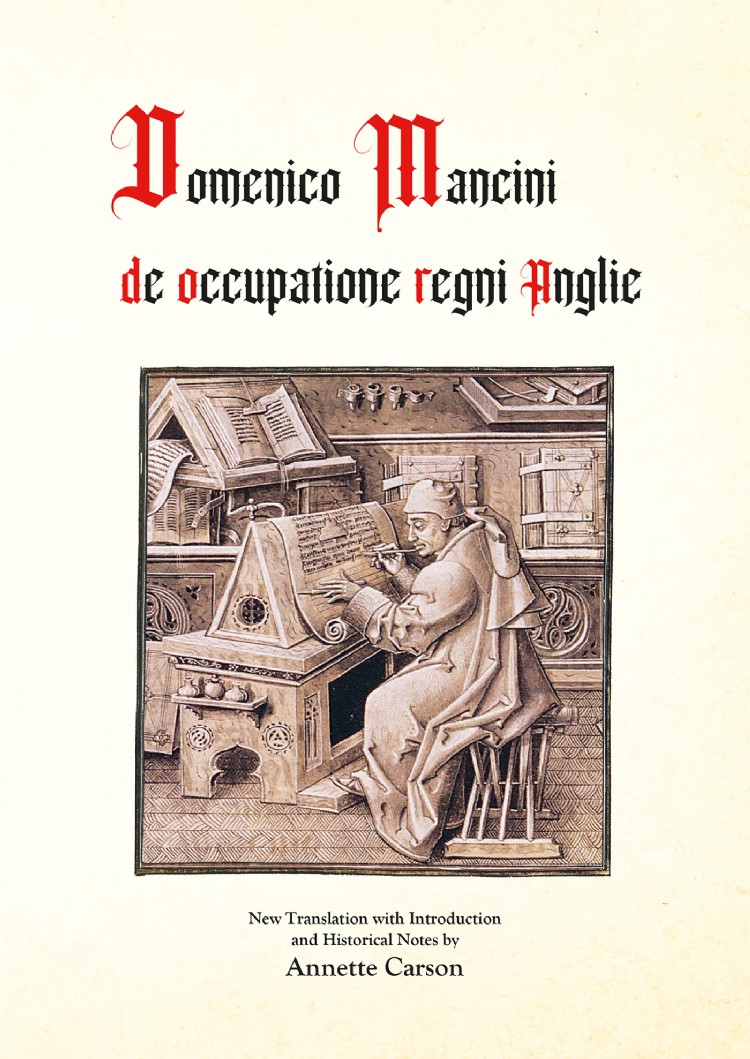
Annette Carson, a member of the team that found Richard III’s grave, has produced this new edition of Mancini’s important eyewitness report. Domenico Mancini was an Italian visitor to London in 1483 who witnessed Richard III’s rise from Protector to King, and wrote the only genuinely contemporary account.
His short narrative, less than 7,000 words, was originally published in the 1930s in an edition that, for modern historians, leaves much to be desired. The title and a number of key passages were mistranslated. In addition, Mancini’s misunderstanding of England’s laws and governance, and his omission of crucial facts, were left unremarked.
This is a more accurate translation and analysis which reflects 21st-century research.
Here's what readers have to say about this book....
The following review by Arthur Kincaid, D.Phil., was submitted to 'The Ricardian' but Dr Kincaid died before it could be published. Annette Carson’s new edition of Domenico Mancini’s work is very welcome – indeed essential in view of the study which has been done since the previous editions by the late C.A.J. Armstrong (1936 and 1969). One of the most important contributions Carson’s new edition makes to historiography is her demonstrating that Mancini was a source for Sir Thomas More’s narrative. Armstrong too often speaks as if More had preceded Mancini (for example, p. 116, n. 46: “Mancini agrees with More’s account”). Carson’s careful study makes it completely clear that More had read Mancini. She rams home the point that “Mancini’s influence lies in how many of the themes and events he chose to highlight were the very items that came to be perpetuated”. (Thus through More he was an influence on Shakespeare). A significant technical reason why a new edition of Mancini is welcome is that, as Carson points out, in the Armstrong’s translation, “the same Latin word . . . is rendered differently and judgmentally when applied to Richard III.” Carson shows that it was Mancini who invented the friendship between Richard and Hastings, which More and others adopted - a point on which Armstrong does not comment, following his usual method of quietly accepting negative information about Richard. A technical aspect of Carson’s edition which helps the reader is her choice to use paragraphs (though the original and Armstrong’s translation do not), and her fluidity of language, which makes the work easier to read. Equally important is that while Armstrong’s traditional bias against Richard III often affects his translation, this is not true of Carson’s. Carson’s book is in every way superior to Armstrong’s. I say this as a personal friend of them both and with huge gratitude to them both for their help with my own work. Arthur Noel Kincaid

Get the latest Troubador articles, news and events sent directly to your inbox.